Explore consciousness, individual experience, communication, autonomy, inclusion, education and the extraordinary question of what it means to be alive together. All eight books can be opened and read free online. Several are editorial or research development editions rather than final, independently reviewed print books.
And the
Winner Is...
NEW BOOK · 25-CHAPTER STORY + 31 TEACHINGS
And the Winner Is...
Two extraordinary young racing rivals find themselves judged by the world while discovering who they really are. Their families, ambition, setbacks and fierce competition open a bigger conversation with Source about consciousness, individuality, meaning and the joy of existence.
What follows: After the story, Source addresses the reader directly in 31 extended explorations of philosophy, science, religion, identity, love and the interconnected nature of life.
Complete free online reading edition · Ben Grey · November 2026
Read the complete bookRead or save the PDF
BOOK 1 · Communication • Connection • Trust
The Rhythm Between Us
The starting point is a person, not a label. This book explores how people communicate through speech, repeated phrases, silence, movement, AAC, music, rhythm, emotional expression and the subtleties of everyday interaction. It considers nonspeaking autism and language differences without reducing anyone to a diagnosis. Through anonymised situations and practical exercises, it asks supporters to listen more closely, adapt their own communication, recognise choice and consent, and allow trust to develop without endless correction.
How it connects: Its central question is how two individual experiences can genuinely meet. It supplies the practical language of listening that runs through the other six books.
Complete online review edition
Read the full communication book
BOOK 2 · Consciousness • Individuality • Perspective
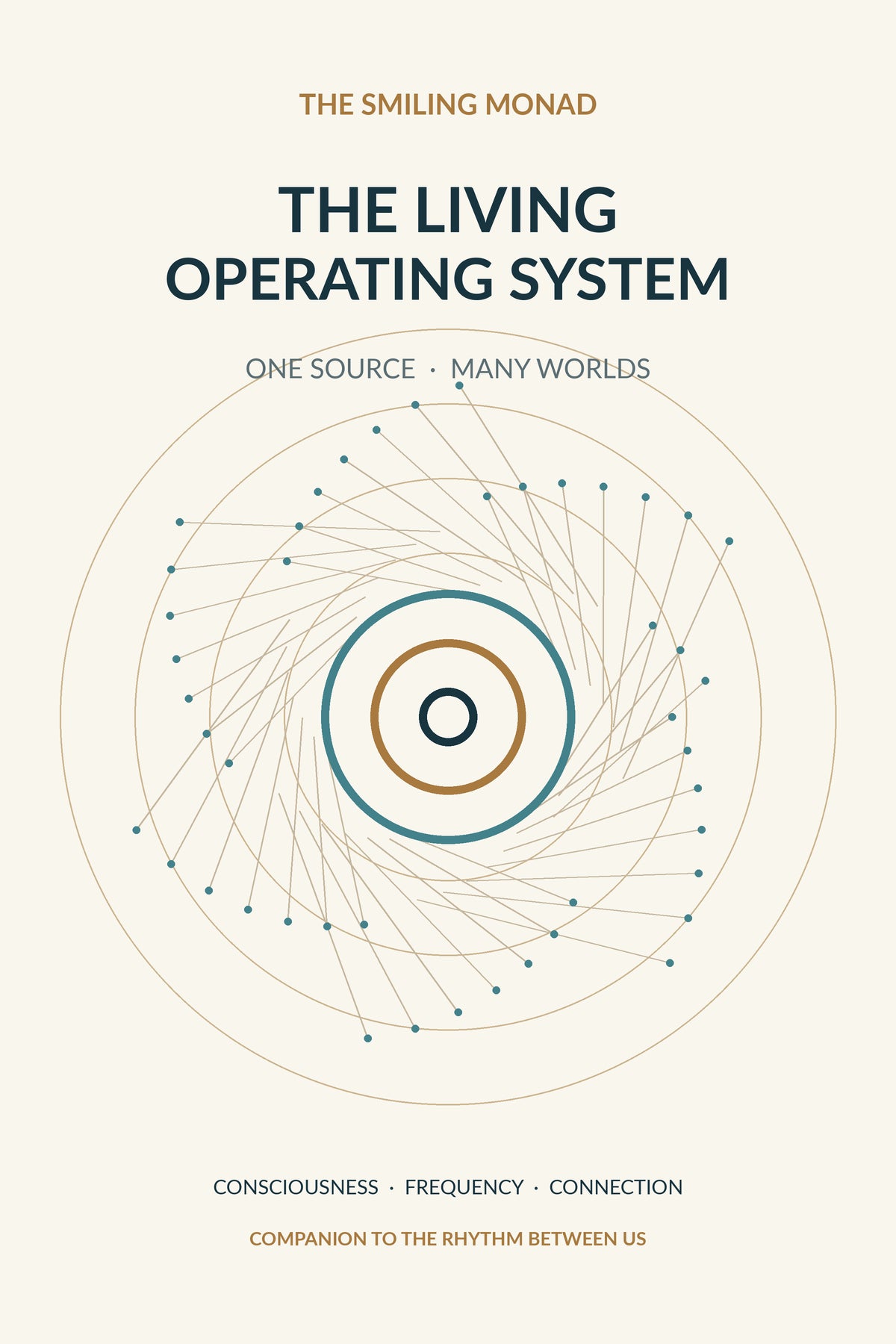
The Living Operating System
An exploration of what it means to experience reality from inside a living body and mind. The operating-system analogy makes room for distinct perceptions, memories, sensitivities and ways of understanding the world. The book compares The Smiling Monad with philosophy, science and cultural traditions, including Indra’s Net, analytic idealism, resonant metaphors and diverse accounts of the self. It examines where these views intersect, and where their differences matter, without claiming that analogy proves a scientific theory.
How it connects: It takes the listening question from Book One into the philosophy of individual perspectives, and provides a bridge between the everyday and the larger cosmology of the final two books.
Complete illustrated online review edition
Read the full philosophy book
THE
INFINITE
UNFOLDING
BOOK 3 · Autism • Human Capacity • Belonging
The Spectrum of Life
The third book asks what respecting individual difference looks like in the actual conditions of a person's life. With autism and disability support as important settings, it examines autonomy, communication, sensory experience, relationships, opportunity, capacity, circles of support and the everyday decisions that either expand or restrict a person's world. It places practical, participant-led planning alongside an examination of attitudes and systems that can mistake compliance for wellbeing.
How it connects: It is the practical application of the first two books: understanding someone, respecting their particular perspective, and creating conditions in which their life can develop on their own terms.
Complete online developmental reading edition
Read the full inclusion book
?
BOOK 4 · An Invitation • Fifteen Chapters • The Big Questions
The Smiling Monad — What Is Reality?
A direct, accessible introduction to the mystery of existence. Beginning behind a deceptively simple question-mark cover, the book asks what consciousness is, how one source might be expressed through distinct lives, how perception constructs our experience, and why fear, time, death and love feel so powerful from inside a particular point of view. It journeys through rhythm and resonance, ancient philosophical arguments, technology, the social matrix we build around ourselves, and the meaning of the four stages of the Smiling Monad symbol.
How it connects: It is the easiest doorway into the larger vision explored in The Infinite Unfolding. Readers can begin here before choosing which practical or philosophical paths to follow.
Complete first online reading edition · 13 November 2026
Read the complete draft
THE
INFINITE
UNFOLDING
BOOK 5 · The Expansive Work • Genesis • Worlds • Mind • Society
The Infinite Unfolding
The longest and most ambitious investigation in the collection. Its ongoing Genesis imagines one infinite consciousness endlessly becoming countless experiences. From there it explores the self, the Smiling Monad symbol, reality as an interpreted interface, possible worlds and intelligences, science and speculation, religious and cultural maps, human psychology, suffering, mortality and the contemporary structures that shape attention and behaviour. Written with irreverence, Australian humour, scepticism toward pretence and a persistent faith in the importance of other people, it takes the philosophy beyond a neat answer and follows the consequences wherever they lead.
How it connects: This is the broad synthesis. The communication, operating-system, and belonging themes from Books One to Three become part of a larger account of reality; What Is Reality? serves as its shorter, more approachable companion.
Full-length online editorial proof · 12 November 2026
Read the full editorial draft
THE
BOOK
OF
LIFE
BOOK 6 · Psychology • Research • Human Flourishing
The Book of LIFE
A Psychologist’s Guide
How might the ideas in this series inform the work of psychologists and other professionals without asking anyone to abandon established evidence or accept a particular worldview? This research-reading edition examines contemporary psychology, wellbeing, therapeutic relationships, neurodiversity, trauma, culture, agency and clinical ethics. It brings together established clinical ideas in one memorable sequence: L — Listening, I — Individuality, F — Functioning and E — Ecology. LIFE is a practical synthesis and teaching structure, not a new treatment school.
How it connects: The first five books explore the meaning of life from different perspectives. Book Six turns towards a practical professional question: how can established psychological techniques be organised to help practitioners understand the whole individual and the life around them? Its original contribution is the Smiling Monad way of bringing established ideas together, with supporting activities, professional resources and a transparent research programme.
Complete online LIFE-led reading edition · 15 November 2026 · Evidence and independent validation plan at the end of the book
Read The Book of LIFE in full
THE
ART
OF
LEARNING
BOOK 7 · Education • Home Learning • Learning Without Walls
The Art of Learning
The Smiling Monad School — Learning Without Walls
Education adapts to the learner; the learner does not have to fit an educational doctrine. This full-length guide brings together evidence-informed teaching, genuine learner choice, inclusive curriculum and circles of learning and support. It explains explicit literacy and mathematics instruction within open projects, accessible communication, assessment, home education, the facilitator’s professional craft and how communities can explore forming a Smiling Monad School wherever they live. Detailed lesson sequences, learner portfolios, ten-week project examples, operational models, professional learning and reusable planning tools make the approach something families and teachers can actually work with.
How it connects: The Book of LIFE applies person-centred thinking to psychology; this seventh book brings that attention to individuality into education. The ideas of listening, relationships, belonging and interconnected experience become a practical teaching and school-design framework. Learning Without Walls is flexible in method but serious about knowledge, skills, curriculum and student progress.
Complete 45-chapter online reading edition · 15 November 2026 · Approximately 70,800 words · Validation plan at the end. The complete text is presented in two connected reading parts.
Read The Art of Learning in full
How the seven books fit together
From another person, to another perspective, to an entire reality. The Rhythm Between Us begins with listening. The Living Operating System asks why each person experiences a different world. The Spectrum of Life explores what those insights mean for choice and support in everyday living. What Is Reality? opens the philosophical question to a wider readership. The Infinite Unfolding follows it through cosmology, society, history, mind and mortality.
The Book of LIFE adds a sixth, deliberately different voice: it does not attempt to demonstrate the cosmology through psychology. Instead, it separates what established clinical research supports from the hypotheses of a new integrative framework, supplies teaching cases and proposes how independent scholars could test those hypotheses. It is an invitation to critical study, not a claim of academic endorsement or a replacement for qualified clinical guidance.
The Art of Learning adds a seventh practical pathway: where the earlier books ask how to understand another person's experience and respond to it well, this book asks how to build education around that person without sacrificing curriculum, good teaching, critical thinking or academic progress. It supports home educators, teachers, facilitators and communities considering their own inclusive learning collective or school. Its detailed field manual, learner assessment examples, school-operating guidance and end-of-book validation plan connect the series to educational practice.
All seven explore a shared concern: if individual lives belong to one interconnected reality, difference is not a problem to be corrected. Their subjects and methods are different: communication practice, philosophy of experience, real-world inclusion, an accessible introduction, an extensive philosophical exploration, a research-informed approach to psychology, and an individual-centred model of education. No reader must accept the cosmology to find value in dignity, curiosity, autonomy and relationship.